

Last Updated on February 5, 2026 by Rebecca Metz
If you’re deciding between memory foam and latex in Austin, TX, the real question isn’t which material feels good for a few minutes. It’s how each performs after years of Austin summers, Texas heat, and humidity. This guide explains what memory foam and latex are made from, how they age in warm climates, and which features matter most if you want a mattress that stays supportive over time.
Quick Decision Guide
- Choose memory foam if you prefer deep contouring and a lower upfront cost, and are comfortable with a shorter lifespan.
- Choose latex if you want cooler sleep, easier movement, and a mattress that holds up for a decade or more in Austin’s climate.
- Heavier sleepers over 200 lb, as well as hot sleepers, usually do better with latex or latex hybrids.
Mattress shopping in Austin can still feel overwhelming, especially when every brand promises cooler sleep in a city that barely cools down at night.
Quick Comparison
| Feature | Memory Foam | Natural Latex |
|---|---|---|
| Primary feel | Deep “hug,” slow rebound | Buoyant “lift,” responsive |
| Heat behavior | Softens with warmth; traps heat | Naturally breathable, neutral |
| Typical lifespan | 3–10 years | 12–20 years |
| Material base | Synthetic polyurethane | Botanical, rubber-based |
| Austin summers | Can feel mushy or hot | Stays consistent |
Latex mattresses commonly last 12–20 years in Austin’s climate, often double the lifespan of lower-density foam models.
Memory Foam
What It Is and How It’s Made
Memory foam is a polyurethane-based foam engineered to soften with heat and pressure. It compresses under your body, holds that shape briefly, then slowly rebounds. This creates the familiar “hug” many people associate with foam mattresses.
Manufacturers make memory foam by combining petroleum-derived inputs with additives that control softness, density, and response time. Because this process scales easily, quality varies widely between brands. Unlike latex, memory foam is entirely synthetic and derived from petrochemicals.
Density, Body Weight, and Durability
Foam density is one of the clearest predictors of longevity.
- Under 4 lb/ft³ breaks down fastest
- 4–5 lb/ft³ offers moderate durability
- 5 lb/ft³ and above holds up better long term
Body weight matters. Sleepers over 200 lb tend to accelerate memory foam breakdown, especially in warm climates, and often notice softening sooner.
If your mattress feels softer every summer, that’s not your imagination. It is heat doing its work on foam.
How It Feels and Edge Support
Memory foam excels at pressure relief and motion isolation, which lighter sleepers and couples often appreciate. The tradeoff is responsiveness. Movement takes more effort, and some sleepers feel stuck.
Most memory foam mattresses rely on high-density polyurethane foam rails or firmer perimeter foam for edge support. These materials soften over time, particularly in heat, so edge support is often one of the first areas to degrade. Some all-foam designs have no dedicated edge system at all, which can create a roll-off sensation as the mattress ages.
Austin Climate Reality
If you’ve ever noticed your bed feeling softer in summer than winter, that’s not your imagination.
Central Texas heat and humidity affect memory foam in two ways. Heat causes foam to soften overnight, reducing support. Humidity accelerates oxidation, the chemical breakdown of polyurethane foams.
Cooling gels and phase-change materials may feel helpful at first, but they do not change how foam behaves long term in this environment.
Construction Details and Off-Gassing
Memory foam mattresses are entirely polyurethane-based. Construction choices matter.
Lower-priced foam beds often rely on:
- fiberglass fire barriers sewn beneath the cover
- chemical flame retardants
- solvent-based glues or spray adhesives
These materials can contribute to off-gassing, the chemical odor some people notice when a mattress is new. In warm climates like Austin, off-gassing can be stronger and linger longer. For sensitive sleepers with asthma, migraines, or chemical sensitivities, this can meaningfully disrupt sleep.
Most foam certifications focus on emissions thresholds, not total chemical load or fiberglass presence.
Lifespan Expectations
- Lower-density memory foam: 3–6 years
- Better-built designs: 6–10 years, depending on body weight and construction
Understanding that distinction makes it easier to see why latex performs differently in Austin’s heat.
Natural vs Synthetic Materials
At a material level, memory foam and latex could not be more different. Memory foam is a fully synthetic product engineered from petrochemicals. Natural latex begins as plant sap and is physically transformed into foam.
That difference affects durability, off-gassing, temperature regulation, and how the mattress responds to heat and humidity over time.
Latex
What It Is and How It’s Made
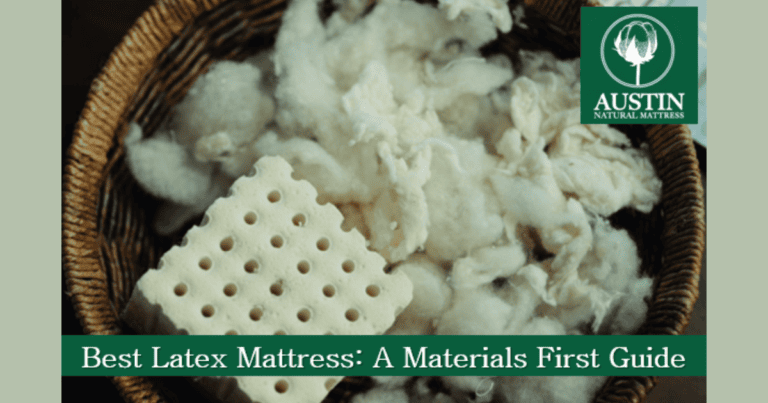
Latex mattresses use foam made from rubber. In higher-quality designs, that rubber comes from the sap of the rubber tree (Hevea brasiliensis), a renewable resource harvested without cutting down the tree.
The sap is collected, whipped into foam, and cured using either the Dunlop or Talalay process. The result is a resilient, breathable material that retains its structure without relying on petroleum-based chemistry.
Two main processes are used:
- Dunlop latex, which is denser and more grounded
- Talalay latex, which is lighter and more buoyant
Both produce foam that resists permanent compression far better than polyurethane.
How It Feels and Edge Support
Latex feels supportive yet responsive. You sleep more on the mattress than in it, and changing positions requires less effort.
Latex hybrids use steel coil support cores, often with reinforced perimeter coils. Steel does not soften with heat, so edge support remains consistent year after year. All-latex mattresses rely on the natural resilience of latex foam, which holds its shape far longer than polyurethane foam even if the edge feels slightly less rigid than a hybrid.
Austin Climate and Longevity
Latex does not rely on heat to contour and is far more resistant to moisture-related degradation than polyurethane foam. When paired with coils and breathable covers, latex is widely considered one of the best cooling mattress materials for Texas heat and humidity.
High-quality latex commonly lasts 12–20 years, depending on construction and use.
Health, Certifications, and Allergy Note
Latex designs often use simpler material systems.
- Fewer (or no) synthetic foams
- Less reliance on (or lack of) adhesives
- Wool or inherent material properties for fire resistance
When present:
True latex allergies are rare in bedding. Most allergic reactions are caused by raw latex proteins, which are largely removed during the latex manufacturing process.
Once durability and sourcing are clear, price comparison starts making more sense long term.
Price Expectations (Context Only)
- Quality memory foam mattresses: around $800–$1,500
- Latex or latex hybrid mattresses: around $1,800–$3,500
Cost-per-year example:
A $1,000 foam mattress lasting 5 years costs about $200 per year.
A $2,400 latex mattress lasting 12 years costs about $200 per year.
Buying Framework
Choose memory foam if you prefer:
- Deep contouring
- Motion isolation, especially for lighter sleepers
- Lower upfront cost
Choose latex if you want:
- Cooler sleep
- Easier movement
- Better durability, especially for heavier sleepers
- Material transparency
Practical Buying Checklist
- Spend 10–15 minutes in your usual sleep positions
- Ask about foam density or Dunlop vs Talalay
- Check warranty sag thresholds and trial terms
- Prioritize breathable covers or hybrids if you sleep hot
- Compare cost per year, not sticker price
Red flag: If a brand will not disclose foam density, fire-barrier type, or material sourcing, assume cost cutting
FAQs
Does latex sleep hot?
No. Latex is naturally breathable and temperature neutral, especially compared to memory foam.
How long does memory foam last in Texas heat?
Typically 3–10 years, depending on density, body weight, and construction.
Is latex safe for people with allergies?
True latex allergies are rare in bedding. Most latex mattresses are well tolerated, but consult a physician if you have a diagnosed allergy.
What’s the difference between GOLS and GOTS?
GOLS certifies organic latex. GOTS certifies organic textiles like cotton and wool.
Do hybrids help with cooling and edge support?
Yes. Hybrids combine coil airflow with foam comfort and usually outperform all-foam beds in hot climates.
Final Takeaway and Next Step
Choosing between latex and memory foam is not about hype. It is about how materials behave in Austin’s climate, how your body responds, and how often you want to replace a mattress.
Memory foam offers plush contouring at a lower entry price but relies on synthetic polyurethane foams, adhesives, and fiberglass or chemical fire barriers that can off-gas and soften more quickly in heat and humidity. Natural latex starts as rubber tree sap, not petroleum, and sleeps cooler while holding its support far longer.
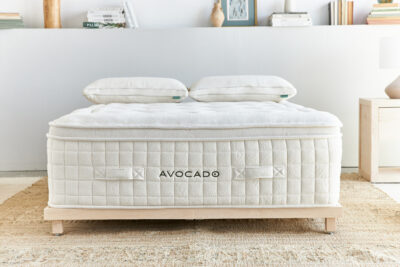
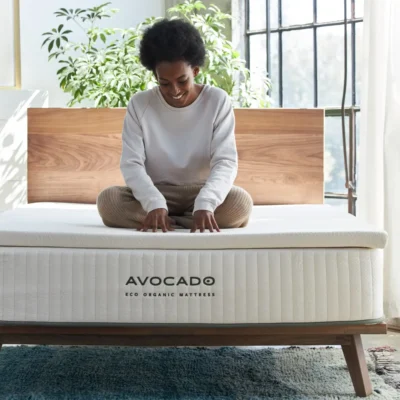
At Austin Natural Mattress, we specialize in natural and certified organic mattresses. Our showroom features latex and latex-hybrid designs from Naturepedic, Avocado Green Mattress, and The Natural Mattress Home, along with a curated selection of natural latex mattress toppers for sleepers who want to fine-tune comfort without replacing their entire bed.
If you are deciding whether latex is the right fit, the most helpful next step is a simple, no-pressure in-store sleep test.
Address
7530 Burnet Rd
Austin, TX 78757
Phone
(512) 452-4444
Hours
Monday–Friday: 10 AM–7 PM
Saturday: 10 AM–5 PM
Sunday: 12–6 PM
We’re here to make choosing easier by focusing on materials, comfort, and longevity, not sales tactics.