
Last Updated on February 19, 2026 by Amanda Demuth
How Austin Homes Are Reimagining Comfort, Design, and Sleep
Instagram bedroom trends don’t stick around because they look good. The ones that last solve real world problems: waking up sore, bedrooms that feel cluttered even when they’re clean, partners with mismatched sleep needs, and rest that doesn’t quite feel restorative.
What’s different now is how people are thinking about those problems. Rather than chasing the next aesthetic, design-conscious homeowners are asking harder questions. Why am I still tired even though I slept? Why does my bedroom feel chaotic? Why do I dread getting into bed? Why am I having to replace things so quickly?
These trends aren’t just visually appealing. They’re responses to how people actually live, sleep, and recover, especially in Austin, where lifestyle, wellness, and design are deeply intertwined.
Today we are looking at some of the most viral sleep and bedroom trends from 2025 that are still going strong into 2026 and how to apply these growingly popular concepts in your own home.
The Scandinavian Sleep Method (Two-Duvet Bed)
What It Is
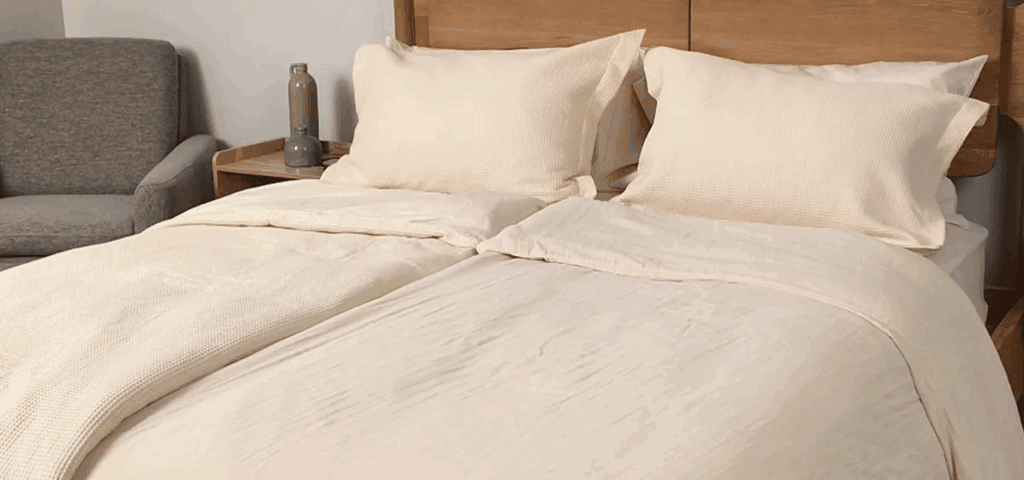
The Scandinavian sleep method replaces a single, shared comforter with two individual duvets on the same mattress. Each sleeper has their own cover, usually in coordinating colors to keep the bed visually cohesive.
This has been standard practice in Sweden, Norway, Denmark, Finland, and Germany for decades. In those cultures, sharing a blanket is considered impractical, not romantic.
Why It’s Trending
The method went viral because it names a problem most couples experience but rarely articulate: shared blankets disrupt sleep. Micro-awakenings caused by pulling, kicking, or overheating accumulate night after night. Research suggests these disturbances can add up to an hour of lost sleep per night for some couples.
Social media reframed separate duvets as a practical upgrade rather than a relationship failure. The conversation shifted from “why can’t we sleep together?” to “why are we fighting for a blanket?”
Why It Works Especially Well in Austin
Austin’s long warm season – often stretching from April through October – amplifies temperature mismatch between partners. Many couples differ by four to six degrees in preferred sleep temperature. One person runs hot; the other wakes up cold.
With one oversized comforter, someone is always uncomfortable. With two duvets, each sleeper can adapt seasonally without changing the bed itself. The warmer sleeper can use a lightweight linen cover while their partner who sleeps cold can choose a thicker, heavyweight duvet insert. We see more and more couples adopting this setup every summer.
Recreate This With
Organic cotton or linen duvet covers paired with breathable wool, alpaca or down natural fill inserts, layered over a temperature-neutral mattress that doesn’t trap heat from below. Look for GOTS-certified organic materials for both breathability and purity.
Relaxed Layering, Linen Bedding, and the Cloud Bed – Reimagined
What It Is
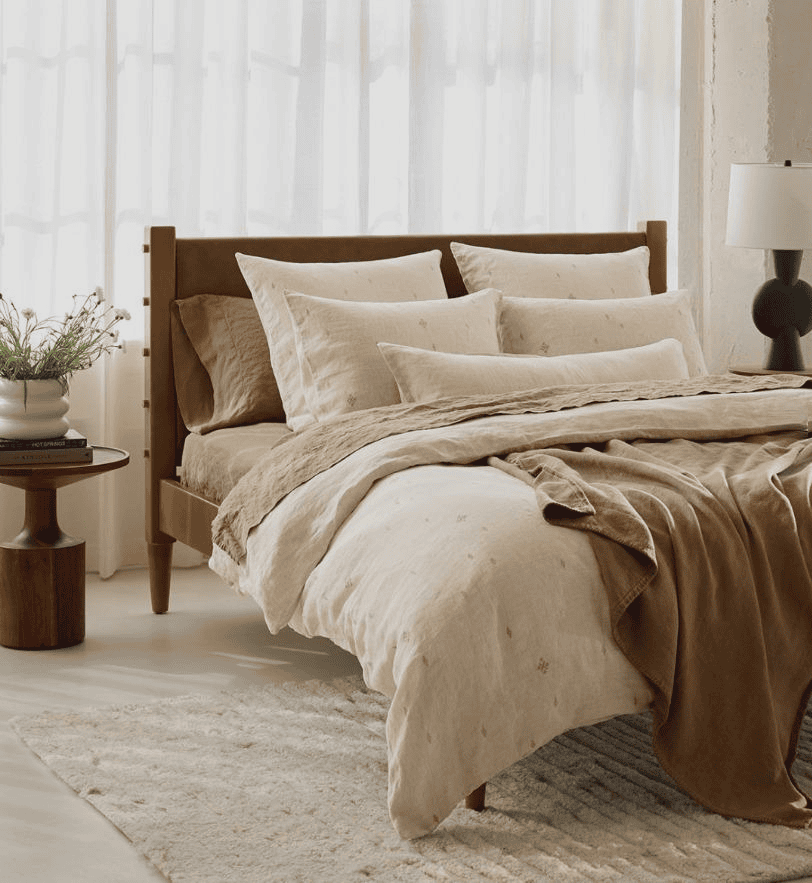
This trend blends rumpled chic bedscaping with the cloud bed aesthetic. Visually, it favors low-profile frames, light neutral tones, and soft, breathable layers that look relaxed rather than styled to perfection.
The bed becomes the focal point of the room – but not in a showroom way. It looks inviting, touchable, and lived-in.
Why People Love It
After years of hyper-curated interiors, people are craving bedrooms that feel restorative rather than performative. Softer visual fields, fewer objects, and muted palettes reduce cognitive load.
Many people report relaxing faster simply by being in a room that feels visually quiet. Designers often refer to this as creating “visual breathing space.”
Where the Trend Often Fails
The aesthetic breaks down when softness comes from bulk instead of structure. Thick memory foam mattresses, heavy synthetic comforters, or placing mattresses directly on the floor create heat and moisture issues – especially in Austin’s humidity.
Memory foam relies on body heat to contour. The material softens as it warms, which sounds comfortable until you realize it’s also trapping that heat against your body. In Austin’s climate, that softness often turns into uncomfortable heat retention by 2 or 3 a.m. Synthetic polyester fills compound the problem by blocking airflow entirely.
How Austin Homes Are Doing It Differently
Successful versions preserve airflow while maintaining softness. Low-profile foundations keep the grounded look without blocking ventilation underneath the mattress.
Natural latex mattresses provide buoyant comfort without trapping heat – latex is inherently temperature-neutral and breathes through its open-cell structure. Linen plays a central role in the bedding itself. Its uneven fiber structure creates micro-ventilation, wicks moisture up to 20% of its weight before feeling damp, and actually softens with every wash rather than pilling or degrading.
Recreate This With
Soft down pillows, Linen or percale bedding layered lightly over a low profile bedframe with natural latex or latex-hybrid mattress, finished with a simple quilt or coverlet instead of heavy decorative layers. Avoid sateen and flannel in warm months – they trap heat.
Custom Firmness: Split Sleep Without Sleeping Apart
What It Is
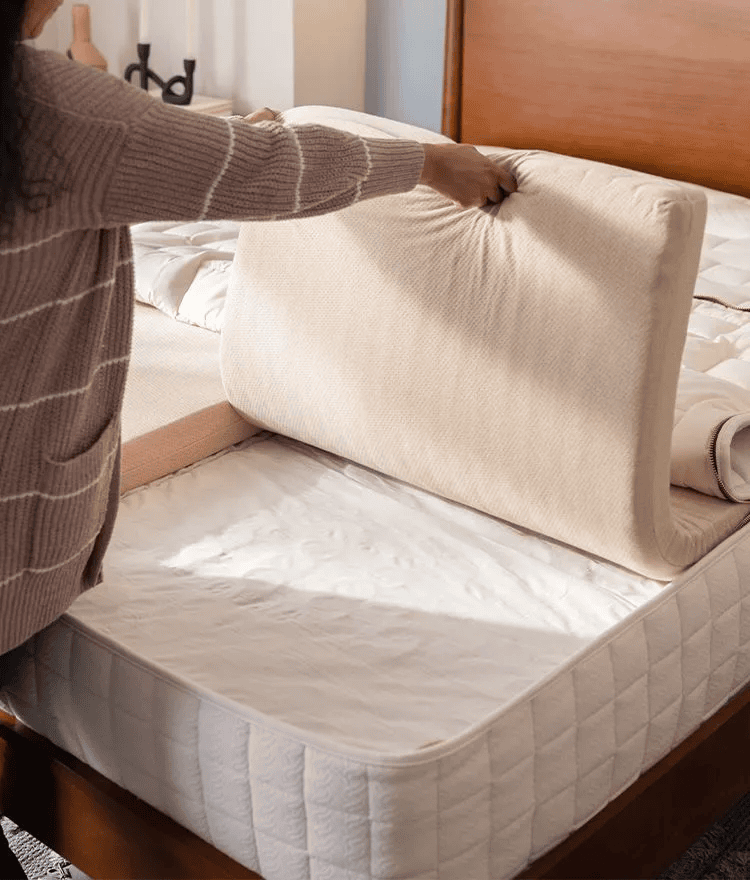
Split sleep refers to mattress designs that allow different firmness levels on each side of the bed while maintaining a unified surface.
This can be achieved through modular internal layers, split comfort cores, or custom constructions within one mattress. From the outside, it looks like any other bed. Underneath, each side performs independently.
Why It’s Trending
As sleep has become a wellness priority, couples are less willing to compromise when it comes to obtaining a good night’s sleep. The concept often appears alongside “sleep divorce,” where partners choose to sleep separately in order to protect their rest.
Split sleep offers a middle path: individualized support for each side of the bed. You get to keep the intimacy without having to compromise on comfort
Why It Works
Bodies are different. A 200-pound back sleeper compresses materials very differently than a 130-pound side sleeper. The heavier person needs more resistance to stay aligned; the lighter person needs more give to avoid pressure points. Weight, sleep position, injury history, and pressure sensitivity all influence how a mattress should feel.
Split firmness also improves longevity. When each side is optimized for the sleeper using it, materials wear more evenly. You’re not fighting a one-size-fits-none compromise that accelerates breakdown on one side.
How Austin Homes Are Implementing It
Brands like Naturepedic and Vispring offer custom firmness on each side within a single mattress. Naturepedic uses a modular latex system where you can swap layers independently. Vispring hand-builds each side to spec with different spring tensions and comfort layers.
Split latex and coil-based systems remain the most durable long-term solution – both materials maintain their integrity for 15 to 25 years, far outlasting foam alternatives.
Quiet Luxury Bedrooms: Buy-It-for-Life Comfort
What It Is
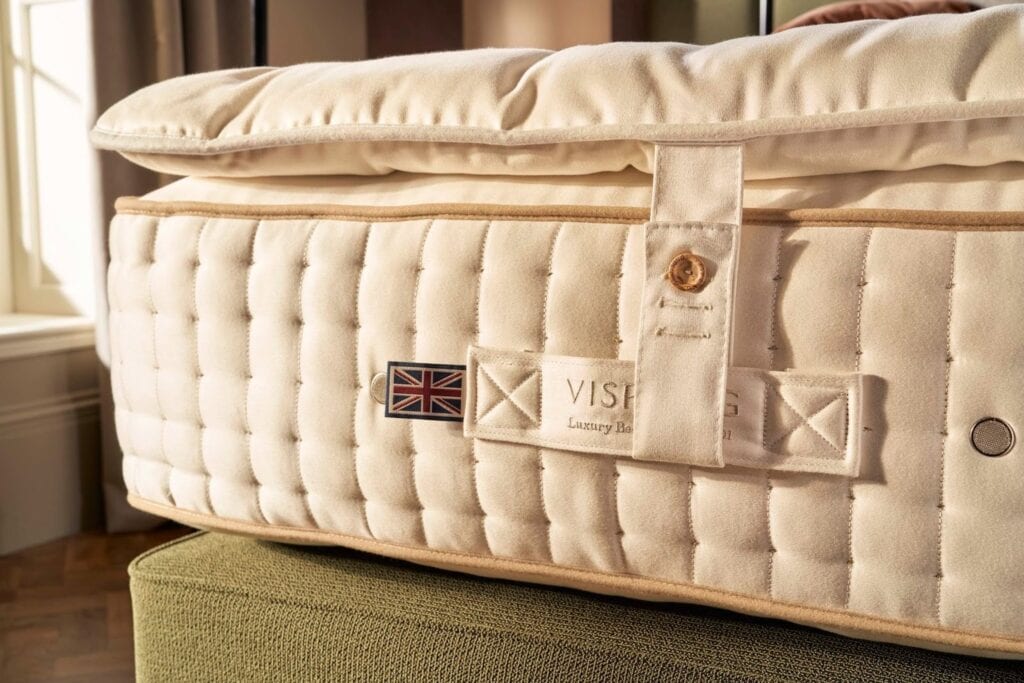
Quiet luxury is the move away from flashy design toward craftsmanship, longevity, and material integrity. In the bedroom, that means everything from the mattress to the nightstand to the sheets: fewer pieces, better quality, nothing disposable.
No logos, no gimmicks – just materials that get better with time. Linen that softens over years. Solid wood furniture you’ll hand down. A mattress that actually lasts as long as the warranty claims.
Why It’s Trending
People are tired of replacing things. The $800 dresser that warps in humidity. The $1,200 mattress that sags by year four. The trendy bedding that pills after a dozen washes. The math is finally catching up: buying cheap and replacing often costs more than buying well once.
A $4,000 mattress that lasts 20 years costs less per night than a $1,200 mattress you replace every six. The same logic applies to furniture and linens – quality pieces amortize.
Why It Works in Austin Homes
Heat and humidity are hard on cheap materials. Foam mattresses break down faster in warm, moist environments. Particleboard furniture swells and warps. Synthetic bedding traps heat and deteriorates. If you’re investing in your bedroom, Austin’s climate is a reason to invest wisely.
Natural materials handle our climate better. Latex breathes and rebounds without losing shape. Solid hardwood stays stable across seasons. Linen and organic cotton wick moisture instead of trapping it. Wool resists dust mites, mold, and mildew naturally. These materials perform better in year ten than synthetics do in year two.
Recreate This With
For the mattress: hand-crafted natural or organic options with warranties that reflect their actual lifespan – 20 to 30 years. For furniture: solid wood with dovetail joints, not veneer over particleboard. For bedding: linen, organic cotton, or wool from companies that focus on quality over trends. The goal is a bedroom where nothing needs replacing for a very long time.
Bespoke and Oversized Beds: When Standard Sizes No Longer Fit
What It Is
Oversized and custom-dimension beds reflect how families actually use their bedrooms today – co-sleeping with young children, sharing space with pets, movie nights, accommodating taller sleepers, and filling expansive primary suites that dwarf standard kings.
Why It’s Trending
A standard king gives each partner just 38 inches of width. For many households, that’s no longer enough. Add a dog or a toddler who migrates at 3 a.m., and someone ends up on the edge.
As Austin homes grow larger and more design-forward, custom proportions feel intentional rather than excessive. A Texas King (80″ x 98″) or Wyoming King (84″ x 84″) can anchor a room that would swallow a standard bed.
Where Most Oversized Beds Fail
Many oversized mattresses are stitched together from multiple sections, creating seams down the center, uneven support where sections meet, and premature sagging at the join. At these dimensions, construction flaws become expensive, long-term problems.
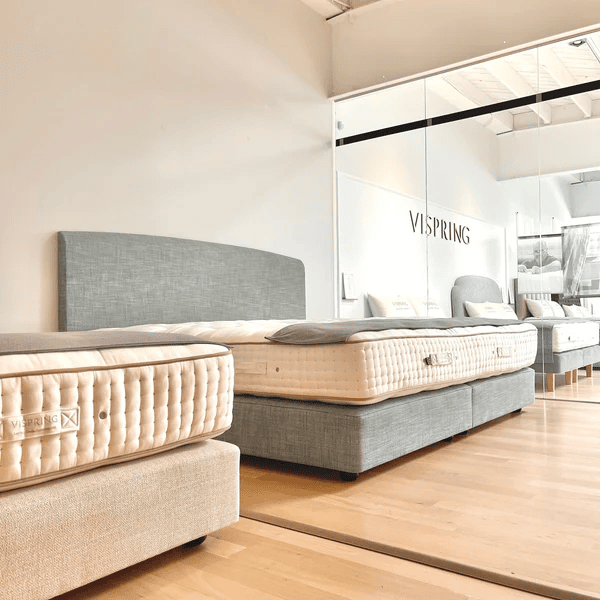
100” x 84” Masterpiece Superb
(This Vispring Masterpiece Superb was commissioned for a family of four for movie nights!)
The Bespoke Difference
Vispring builds truly bespoke mattresses in any dimension as a single continuous piece. Hand-nested calico pocket springs run edge-to-edge with no center seam. Each spring is inserted by hand, nested into the one beside it – a technique that takes longer but eliminates gaps in support.
The comfort layers use real British fleece wool, horsetail hair, and hand-teased cotton – materials chosen for breathability and resilience, not cost reduction. Support remains uniform across the entire surface, even at oversized scales. Each mattress is backed by a 30-year guarantee because the construction supports it.
Recreate This With
Custom-dimension, hand-built mattresses planned alongside room scale, doorway access, and long-term use. Measure twice – oversized mattresses can be difficult to move once in place.
Austin Interior Designers on Instagram to Follow in 2026
These Austin designers understand that great bedrooms start with great foundations.
- Britt Design Group | @brittdesign.group (7.5K) | brittdesigngroup.com – Been doing wellness-focused design in Austin since 2001, before it was trendy. They keep a list of chemicals they won’t put in homes. When they couldn’t find furniture that met their standards, they started their own line.
- Rachel Jackson Design | @racheljacksondesign (5.7K) | racheljacksondesign.com – Designs for ADHD/neurodivergent brains. Visually calming rooms that don’t overwhelm. If you’ve ever walked into your bedroom and felt stressed but couldn’t explain why, she can probably tell you exactly what’s wrong.
- Urbane Design | @theurbanedesign (26K) | urbanedesignstudios.com – Big on reusing and repurposing. They’ll mix a vintage dresser with new pieces so your room looks collected, not catalog-ordered. Less stuff in landfills, more character in your home.
- Etch Design Group | @etchdesigngroup (10K) | etchinteriordesign.com – Warm and layered with lots of natural materials. They design rooms meant to last – not spaces you’ll want to redo in five years.
- Claire Zinnecker Design | @clairezinnecker (65K) | clairezinneckerdesign.com – Clean and airy. Great with older homes – she’s currently restoring an 1898 Victorian. Believes the greenest building is the one you don’t tear down.
- Studio Ferme | @studioferme (1.4K) | studioferme.com – Serious about non-toxic materials and air quality. They live in a Passive House, so they practice what they preach. Minimalist, calm, Japanese-influenced.
- Breathe Design Studio | @breathedesign (8.1K) | breathedesignstudio.com – Modern but not cold. Danish-inspired – think clean lines with warm woods. They care about sustainable materials and design spaces that actually support how you feel.
- Heidi Houdek Interiors | @heidihoudekinteriors (2.4K) | HeidiHoudekInteriors.com – Boho but grown-up. Lots of texture, natural fibers, organic materials. Rooms that feel relaxed without looking messy.
- Ashby Collective | @ashby_collective. (13K) | ashbycollective.com – Self-described “luxury interior design studio in Austin, TX” with a polished, high-end residential aesthetic; Custom furniture design capability.
FAQs
What is the Scandinavian sleep method?
The Scandinavian sleep method uses two separate duvets on one shared mattress instead of a single comforter. Each sleeper controls their own temperature and coverage without disturbing their partner. It’s been standard practice in Northern Europe for decades and is increasingly popular in the U.S. as couples prioritize sleep quality over tradition.
What bedding is best for hot sleepers in Austin?
Linen and percale cotton sheets paired with lightweight wool or natural-fill duvets perform best. Linen’s irregular fiber structure creates natural airflow, and it wicks moisture better than cotton. Avoid sateen, flannel, and synthetic fabrics – they trap heat against the body. Look for GOTS-certified organic materials for both breathability and reduced chemical exposure.
Are latex mattresses better than memory foam for Austin’s climate?
For most sleepers in Central Texas, yes. Latex stays temperature-neutral because of its open-cell structure – it doesn’t rely on body heat to contour the way memory foam does. Natural latex also resists mold and dust mites, lasts 15 to 25 years (compared to 6 to 8 for most foam), and doesn’t off-gas VOCs. Memory foam softens in heat, which accelerates wear and creates a “sleeping hot” problem that compounds through Austin’s long summers.
What’s the difference between ‘natural’ and ‘certified organic’ mattresses?
“Natural” is an unregulated marketing term – any mattress can claim it, and many do with as little as 10% natural content. “Certified organic” requires third-party verification that materials meet specific standards throughout the entire supply chain. GOTS (Global Organic Textile Standard) certifies textiles like cotton and wool. GOLS (Global Organic Latex Standard) certifies latex. Always ask for documentation – reputable brands provide it readily.
Where can I buy organic mattresses in Austin?
Austin Natural Mattress on Burnet Road is the only local store that exclusively carries certified non-toxic and organic mattresses. You can test mattresses from Avocado, Naturepedic and The Natural Mattress Home in person – no memory foam, no fiberglass fire barriers, no chemical flame retardants anywhere in the showroom.
Can Vispring make custom-sized mattresses?
Yes. Vispring builds bespoke mattresses in any dimension as a single, continuous piece – no seams, no stitched-together sections. This includes oversized options like Texas King (80″ x 98″), Wyoming King (84″ x 84″), and true custom dimensions for unusual room configurations or antique bed frames. Each is hand-built in Plymouth, England, and backed by a 30-year guarantee.
Visit Austin Natural Mattress
At Austin Natural Mattress, you can compare certified organic latex, latex-hybrid, and hand-built luxury brands side by side – including Vispring, Avocado, Naturepedic.
We are the only mattress store in Austin that exclusively carries natural and organic mattresses. No memory foam. No fiberglass fire barriers. No chemical flame retardants.
As ASID Industry partners we also offer a Designer Trade Program for interior designers, builders, and architects interested in providing health focused, non-toxic bedding in bedroom design.
Austin Natural Mattress
7530 Burnet Rd, Austin, TX 78757
(512) 452-4444
Mon–Fri 10am–7pm
Sat 10am–5pm
Sun 12–6pm




Leave a Reply